
Most service businesses generate new clients through a combination of referrals, chance encounters, and the occasional enquiry from someone who found them on Google. That’s not a marketing strategy — it’s hope. A digital marketing funnel replaces hope with a system: a deliberate sequence of content, channels, and touchpoints that moves potential clients from not knowing you exist to signing a contract, and from signing a contract to becoming a source of referrals. This guide explains exactly how to build one for a service business — including what makes service funnels different from the product-based examples you’ll find in most marketing resources.
Why Service Business Funnels Are Different
Most marketing funnel frameworks were built with products in mind. Someone sees an ad, clicks to a product page, adds to cart, checks out. The funnel is short, transactional, and often completed in a single session.
Service businesses work differently. The sale is rarely impulsive. The client is buying a relationship and its outcomes — outcomes they can’t see or touch before they commit. The decision-making process is longer, involves more research and comparison, requires building trust before any contract is signed, and typically involves multiple touchpoints across days or weeks.
This means a service business funnel needs to:
- Build awareness among people who may not yet know they need the service
- Nurture interest during an extended research and evaluation period
- Provide enough evidence of competence and trustworthiness to earn a conversation
- Convert that conversation into a proposal and then a signed agreement
- Continue working on the relationship after the contract is signed
Each stage requires different content, different channels, and different success metrics. Building the funnel means designing all four stages deliberately — not leaving any of them to chance.
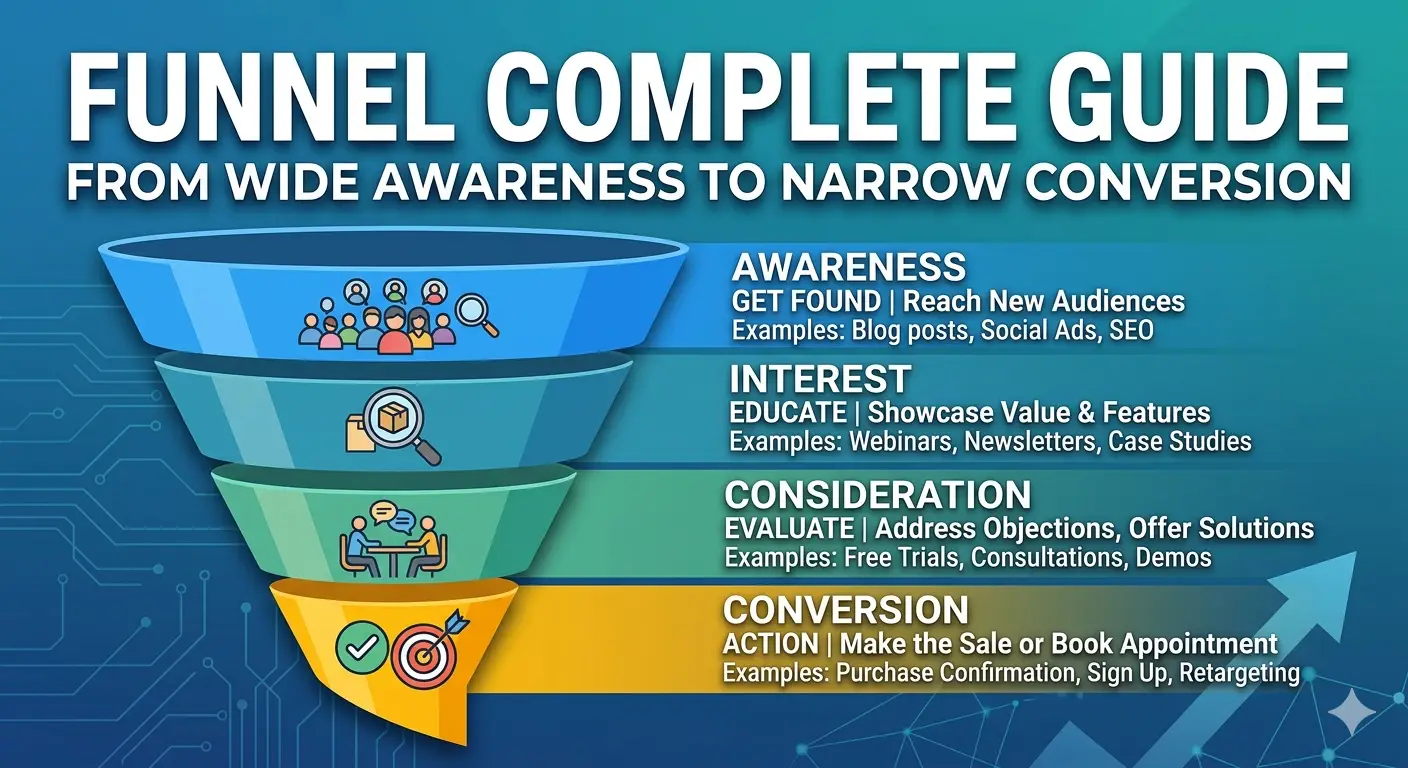
The Four Stages of a Service Business Marketing Funnel
Stage 1: Awareness — They Don’t Know You Exist Yet
The widest part of the funnel. Your job here is to appear in front of potential clients who have a problem you can solve, whether or not they’ve started actively looking for solutions.
What drives awareness for service businesses:
Organic search and content marketing. Blog posts, guides, and educational content that rank for the questions your potential clients are asking — exactly what this blog is doing. When someone searches “how much does a website cost UK” or “what is AI workflow automation,” appearing on page one puts HusQuay in front of potential clients who weren’t looking for HusQuay — they were looking for an answer. That’s the top of the funnel working.
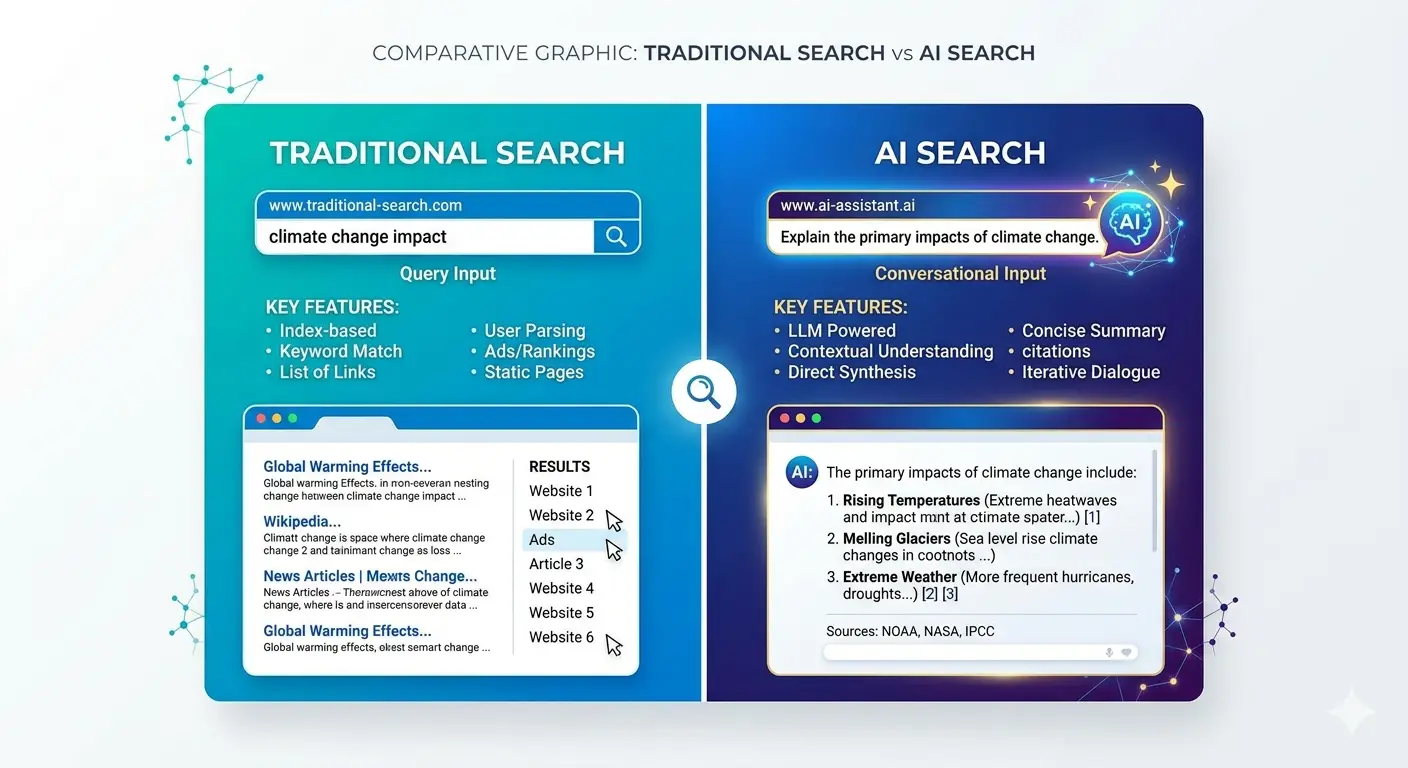
Answer Engine Optimisation. As AI-powered search grows, the businesses whose content AI engines draw from when answering questions about their service category build awareness with audiences who never type into a search engine at all.
LinkedIn and organic social. Consistent, valuable content on LinkedIn — the platform your potential B2B clients actually use — creates awareness among people in your network and their networks. This compounds over time as engagement extends reach beyond your immediate connections.
Google Ads (broad or awareness campaigns). Paid search for informational and consideration keywords reaches potential clients earlier in their research process than conversion-focused campaigns.
Local SEO and Google Maps. For businesses serving a defined geographic area, appearing in the local map pack creates awareness among people actively searching for services in your area.
Referrals. While not a digital channel, referrals arrive at the top of the funnel — and the funnel’s job is to convert them as efficiently as possible from that starting point.
The awareness stage metric: reach — how many relevant people are encountering your business for the first time.
Stage 2: Consideration — They’re Evaluating Their Options
The potential client now knows you exist. They’re not ready to buy — they’re doing research, comparing options, building a picture of who they might work with. This stage is where most service businesses lose prospects they could have won.
What wins the consideration stage:
A website that builds trust efficiently. Within seconds of landing on your website, a potential client should understand what you do, who you do it for, that you’ve done it successfully for people like them, and what to do next. Your portfolio, case studies, client testimonials, and results evidence all belong here — not buried in an About page, but visible and credible from the moment someone arrives.
Case studies and social proof. The most powerful consideration-stage content is evidence — specific, measurable outcomes you’ve delivered for real clients. “We redesigned HusQuay’s website” is a claim. “We redesigned a Wolverhampton agency’s website, their organic traffic increased by 140% in six months, and they’ve generated 23 new client enquiries attributable to the site” is evidence. Evidence wins.
Comparison and educational content. Blog posts that help potential clients understand their options — like this one — keep you visible and valuable during their research period. Every piece of useful content consumed moves the relationship forward without requiring a sales interaction.
Email nurture. If a visitor provides their email address — through a lead magnet, a newsletter signup, or a resource download — you can continue the conversation with them directly. A well-structured email sequence delivered over two to four weeks moves a cold lead through consideration far more effectively than hoping they come back to your website.
Retargeting ads. People who’ve visited your website but not yet enquired can be re-engaged through targeted ads on Google and social platforms. Retargeting keeps your business visible during the consideration period at a relatively low cost.
The consideration stage metric: engagement — time on site, pages per session, email open rates, content downloads, return visits.
Stage 3: Decision — They’re Ready to Choose
The potential client has done their research. They have a short list. They’re going to make a decision in the next few days or weeks. This is the narrowest and highest-stakes part of the funnel.
What wins the decision stage:
A frictionless enquiry process. The moment a potential client is ready to take action, any friction — a broken contact form, a phone number that goes to voicemail, a slow page, a confusing booking process — loses them. The path from “I want to talk to these people” to “I’ve booked a call” must be seamless.
A discovery call designed to qualify and convert. The sales conversation for a service business is not a pitch — it’s a diagnostic. The prospect has a problem; your job is to understand it well enough to propose the right solution and demonstrate, through the quality of your questions, that you’re capable of solving it. A well-structured discovery process is one of the highest-leverage elements of the entire funnel.
Proposals that sell. A proposal is not a quote. It should restate the client’s problem in their language (showing you understood), present your recommended solution with clear rationale, evidence that you’ve solved similar problems, and a clear, compelling call to action. A generic scope-and-price document loses deals that a thoughtful proposal would win.
Social proof at the point of decision. Reviews, testimonials, and case studies from clients similar to the prospect are particularly powerful here. People making a final decision want confirmation that others like them made the same choice and don’t regret it.
The decision stage metric: conversion rate — what percentage of enquiries become proposals, and what percentage of proposals become clients.
Stage 4: Retention and Referral — The Funnel’s Hidden ROI
Most businesses treat the funnel as ending at the signed contract. The most successful ones treat it as just beginning.
A client who receives an excellent experience and feels genuinely valued has two further functions beyond their own repeat business: they provide reviews and testimonials that strengthen your consideration-stage evidence, and they refer new clients who arrive pre-sold and with significantly shorter sales cycles.
What builds retention and referral:
Structured onboarding. The experience immediately after signing sets the tone for the entire relationship. A clear, professional onboarding process — welcome email, project timeline, points of contact, expectations on both sides — reduces anxiety and builds confidence.
Proactive communication. Don’t wait for clients to ask for updates. Proactive, regular communication about progress demonstrates care and competence. Problems handled transparently strengthen trust; problems discovered by the client and reported back to you erode it.
Milestone check-ins and reviews. Regular conversations about whether the work is delivering what the client needed — not just project status updates — identify expansion opportunities and prevent quiet dissatisfaction from becoming churn.
Review requests at the right moment. The right time to ask for a review is immediately after a positive moment — a successful project delivery, a milestone hit, positive feedback received. A personalised request at this moment converts far better than a generic automated prompt.
A referral process. Don’t leave referrals to chance. Ask specifically. “We love working with businesses like yours — if you know anyone facing similar challenges, we’d genuinely appreciate an introduction.” Most satisfied clients are willing to refer; most of them simply don’t think to do it without being asked.
The retention and referral stage metric: client lifetime value, net promoter score, referral rate.
Connecting the Stages: The Mechanics
A funnel only works if the stages connect. Here’s what the connective tissue looks like in practice:
Blog post → Email capture: A valuable blog post includes an offer — a free resource, a checklist, a guide — that a reader can access by providing their email address. This converts anonymous traffic into known leads.
Email sequence → Booking link: A nurture sequence over two to three weeks delivers further value, builds familiarity, and at the right moment — when the prospect has demonstrated sufficient engagement — makes a direct, low-pressure offer to book a conversation.
Discovery call → Proposal: A structured discovery call that properly diagnoses the client’s situation produces a proposal that’s specific, relevant, and positioned to win.
Delivered project → Review and referral request: A simple, timed process for requesting reviews and referrals at the moment of maximum client satisfaction.
Auditing Your Current Funnel
Before building something new, it’s worth mapping what you already have. Ask these questions for each stage:
Awareness: How are people finding out we exist? Which channels? Which content? What are we measuring?
Consideration: When someone visits our website, what do they see? Is there enough evidence to build trust? What happens if they don’t enquire immediately — can we stay in contact?
Decision: What’s our enquiry-to-proposal conversion rate? What’s our proposal win rate? What would make each of these higher?
Retention and referral: What’s our process for keeping clients engaged? When did we last ask for a referral? How many of our reviews have come from a deliberate request vs chance?
The gaps in your answers are your funnel’s gaps. Start there.
Frequently Asked Questions
What is a digital marketing funnel for a service business? A digital marketing funnel for a service business is a deliberate sequence of content, channels, and touchpoints that moves potential clients from awareness (not knowing the business exists) through consideration (evaluating options) to decision (signing a contract) and then into retention and referral (becoming a source of repeat business and introductions). Unlike product funnels, service funnels typically involve a longer consideration period and require building significant trust before any transaction occurs.
How is a service business funnel different from an e-commerce funnel? E-commerce funnels are typically short and transactional — a customer moves from ad to product page to purchase in a single session. Service business funnels are longer, trust-dependent, and often involve multiple touchpoints across days or weeks before a decision is made. The consideration stage is significantly longer, the decision involves a relationship rather than a product, and the post-sale experience is a critical driver of retention and referral.
What content works best at the top of a service business marketing funnel? Educational content that addresses the questions potential clients are researching — blog posts, guides, and how-to articles that rank in search results and are shared on social media. The goal is to be visible and valuable to potential clients during their research phase, before they’ve started evaluating specific providers. The blog you’re reading now is an example of top-of-funnel content for HusQuay.
How do I turn website visitors into leads for a service business? The most effective method is offering something valuable in exchange for an email address — a checklist, a guide, a free resource relevant to your ideal client. This converts anonymous visitors into known leads who can be nurtured through an email sequence. A clear, friction-free booking option for a discovery call or consultation also converts visitors who are further along in their decision-making.
How long should a service business marketing funnel take from first contact to close? This varies widely by service type, price point, and client. For lower-cost or more transactional services, the funnel may close in days. For higher-value or longer-term engagements, the typical cycle runs two to eight weeks from first contact to signed contract. Building a funnel means designing deliberately for whatever that cycle length is — ensuring you stay visible and valuable throughout the consideration period, however long it runs.
Do I need expensive tools to build a marketing funnel? Not initially. The foundational tools — a website with a contact form, Google Analytics, a basic email marketing platform (Mailchimp or equivalent), and a scheduling tool like Calendly — cost under £50/month combined and are sufficient to build and test the core funnel mechanics. More sophisticated CRM, automation, and analytics tools become valuable as the funnel matures and the volume of leads increases.
Final Thought
A marketing funnel is not a technology project or a campaign — it’s a system that runs continuously in the background of your business, bringing potential clients in at the top and moving them toward a decision with less manual effort over time.
The businesses that grow most predictably are the ones that have built this system deliberately rather than relying on referrals and occasional fortunate encounters. They know where their clients come from, what moves them from stranger to prospect, and what converts prospects to clients. That knowledge makes growth intentional rather than accidental.
At HusQuay, building the funnel — from the website and SEO that drive awareness, to the conversion-focused design that turns visitors into enquiries, to the automation that nurtures leads without manual effort — is exactly what we do for clients. If you want a system rather than a hope, let’s build it.
👉 Book a free strategy call with the HusQuay team
HusQuay is a digital growth agency helping small businesses across the UK, USA, Australia, and Canada build websites, brands, and digital systems that create measurable results. Based in Wolverhampton, UK.