
Right now, people in your area are searching for exactly what your business offers. Some of them are typing your service into Google with your city’s name. Others are asking their phone to find something “near me.” A growing number are asking AI assistants for local recommendations. Whether your business appears in those results — prominently, credibly, and ahead of your competitors — depends almost entirely on one thing: how well your local SEO is working. This guide explains what local SEO is, how it works, and why it has become one of the most important digital investments a UK small business can make.
What Is Local SEO?
Local SEO (Local Search Engine Optimisation) is the practice of optimising your online presence so that your business appears prominently in search results when people look for products or services in a specific geographic area.
When someone searches “accountant in Manchester,” “web designer near me,” or “best coffee shop Birmingham,” Google doesn’t just show the most authoritative websites in the world — it shows the most relevant local businesses. Local SEO is the set of techniques that determines whether your business is one of them.
It is a distinct discipline from standard SEO. While traditional SEO focuses primarily on ranking website pages for competitive keywords nationally or globally, local SEO focuses on geographic relevance — showing your business to people who are physically nearby or searching for services in your specific area.
Who Needs Local SEO?
The most common misconception about local SEO is that it’s only relevant for businesses with a physical premises — shops, restaurants, clinics, salons. In reality, local SEO is equally critical for any business that serves clients in a defined geographic area, whether or not customers ever visit you in person.
Service area businesses — plumbers, electricians, landscapers, cleaners — search for clients in defined postcodes. Every one of them is competing in local search, whether they know it or not.
Professional services — solicitors, accountants, financial advisers, consultants — their clients search locally because they want someone accessible, someone they could meet if needed, someone embedded in the same business community.
Digital agencies and marketing businesses — including businesses like HusQuay — win local clients because local search signals trust and proximity. A business in Wolverhampton searching for a web designer is more likely to engage with an agency they can see is genuinely local than one with no geographic identity at all.
B2B businesses — supply businesses, wholesale operations, manufacturers serving a regional market — all benefit from local visibility even if their product or service isn’t inherently location-dependent.
If you have clients within a definable geographic area, local SEO is for you.
How Is Local SEO Different from Regular SEO?
Both disciplines share the same goal — appearing prominently when people search for what you offer — but they use different signals and produce different types of results.
Standard SEO focuses on: the quality and relevance of your website content, the number and authority of websites linking to yours, your website’s technical performance, and how well your pages answer the questions people are searching for.
Local SEO focuses on all of those things, plus: the completeness and authority of your Google Business Profile, the volume and recency of your Google reviews, the consistency of your business information across the web, the number and quality of local citations (mentions of your business name, address, and phone number on other websites), and geographic signals within your website content.
The results they produce also look different. Standard SEO competes for positions in the ten blue links Google shows on a standard search results page. Local SEO competes for the local map pack — the prominent block of three business listings with a map that appears above the standard results for local searches, and which captures 40–60% of all clicks.
Getting into that map pack — and rising within it — is the primary goal of local SEO for most small businesses.
The Components of Local SEO
Google Business Profile
Your Google Business Profile (formerly Google My Business) is the most important single asset in your local SEO strategy. It is the source of the information that appears in the map pack — your business name, category, address, phone number, hours, reviews, photos, and posts.
A complete, accurate, actively managed Google Business Profile is the foundation without which everything else in local SEO is significantly less effective. Many businesses claim their profile and do nothing further with it. That’s the equivalent of opening a shop and never arranging the window.
Local Citations
A citation is any mention of your business name, address, and phone number (NAP) on any website — directory listings, industry associations, local news sites, business chambers, review platforms. Google cross-references these citations to verify that your business is real, active, and located where you say it is.
The major UK directories — Yell, Yelp, Bing Places, Apple Maps, Thomson Local, FreeIndex — should all carry your correct, consistent business information. Industry-specific directories relevant to your sector add additional authority.
Reviews
Google reviews are one of the most powerful local ranking signals — and one of the most visible trust signals for potential clients comparing businesses in the map pack.
Google looks at the total number of reviews, the average rating, the recency of reviews, and whether the business responds to them. A business with 40 recent reviews and a 4.7 average will consistently outrank a competitor with 8 old reviews and a 4.9 average.
Getting reviews is not passive. The businesses at the top of local search results almost all have a deliberate, consistent process for requesting reviews from satisfied clients.
NAP Consistency
NAP — Name, Address, Phone number — must be identical across every online platform where your business appears. Even subtle variations (Ltd vs Limited, Road vs Rd, a different phone number format) create inconsistency signals that reduce Google’s confidence in your listing and suppress your rankings.
An NAP audit — checking every directory and platform where your business appears and correcting inconsistencies — is one of the quickest wins in local SEO.
Local Keyword Optimisation
Your website must communicate clearly to Google that you serve specific geographic areas. This means naturally including location names in your page titles, meta descriptions, headings, and body content. It means having a contact page with your full address and an embedded Google Map. It means, for businesses serving multiple towns, creating dedicated service area pages that speak to each location specifically.
Local Link Building
Links from other local websites — local news outlets, business associations, community organisations, complementary local businesses — carry particular weight in local search. A link from the Wolverhampton Chamber of Commerce, a mention in the Express & Star, or a feature on a local business blog sends a geographic authority signal that a generic link from a national website doesn’t.
Why Local SEO Matters More Than Ever in 2026
Several converging trends are making local SEO increasingly important — not less.
Mobile search growth. The majority of local searches now happen on mobile devices, often in the moment of need — someone needing a plumber right now, someone looking for a café nearby, someone researching an accountant while commuting. Mobile searches have a high intent-to-action ratio, making local mobile visibility particularly valuable.
“Near me” search volume. Searches including “near me” have grown by several hundred percent over the past five years and continue to grow. People are actively specifying local intent more than ever before.
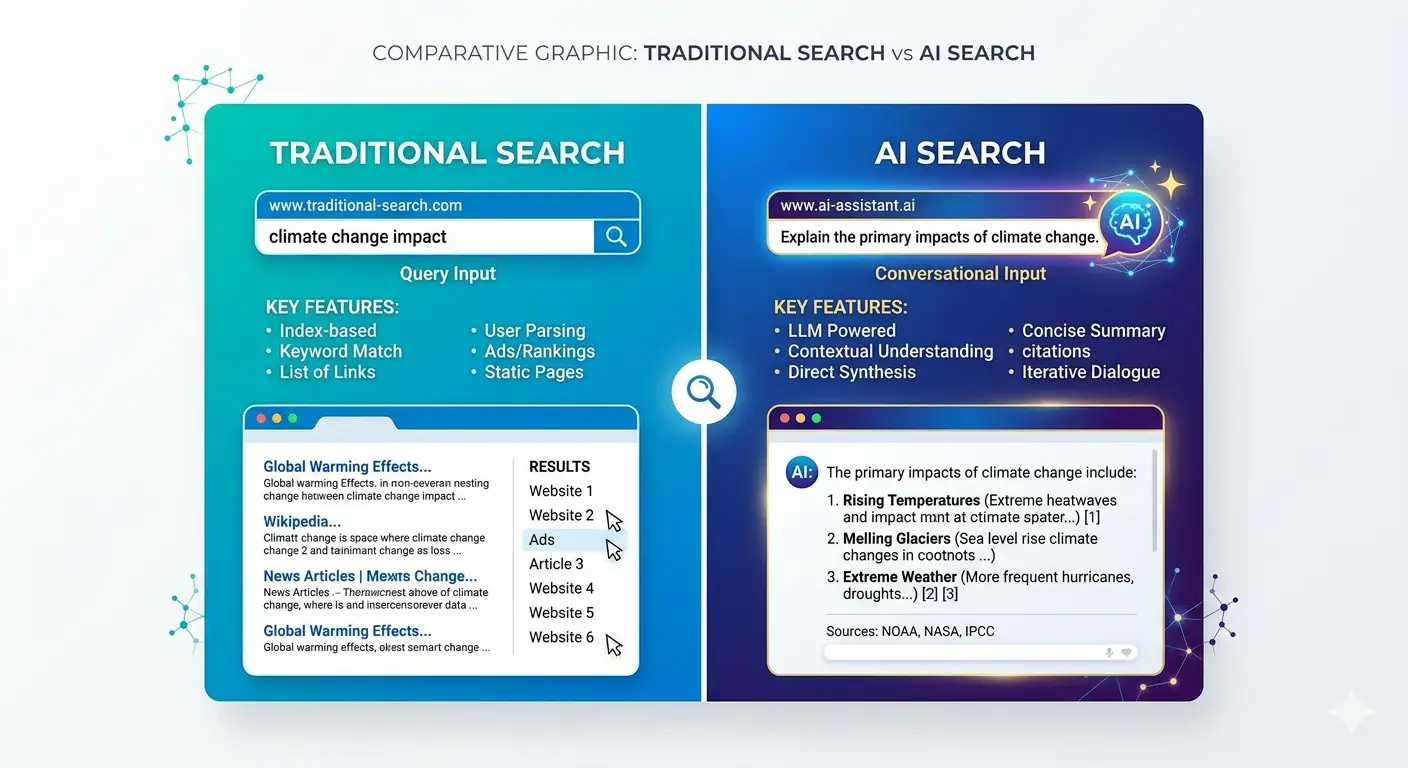
Voice and AI search. When someone asks their phone or a smart speaker to “find a web designer near me,” the results come from local search signals — primarily Google Business Profile data. As AI-powered search becomes more prevalent, local authority signals become even more critical to being included in AI-generated local recommendations.
Less crowded than national SEO. Many small businesses have never invested in local SEO, which means the competitive bar is lower than in national search. A business that does the basics properly often reaches the top three positions in its local category faster and with less resource than competing for national rankings.
What Results Can Local SEO Actually Deliver?
Done consistently, local SEO delivers several compounding results over time:
Increased visibility in the Google Maps pack for searches in your service area. More calls, direction requests, and website visits from people who found you through local search. Growing review volume that builds trust with new visitors before they ever contact you. Reduced dependence on paid advertising as organic local visibility generates consistent enquiries. Stronger brand recognition within your local market as your business appears repeatedly in relevant searches.
The timeline varies by market and starting point, but businesses that implement local SEO properly — consistently optimising their Google Business Profile, generating reviews, building citations, and publishing local content — typically see meaningful visibility improvement within eight to twelve weeks.
How Much Does Local SEO Cost?
Local SEO investment falls into two categories: the time or money spent getting the foundations right, and the ongoing cost of maintaining and growing that presence.
Initial optimisation: Claiming and fully completing your Google Business Profile, auditing and fixing NAP inconsistencies, building out your citation profile on major UK directories, and adding location signals to your website — this work typically costs £500–£1,500 if handled professionally, or a significant time investment if done yourself.
Ongoing management: Posting regularly on your Google Business Profile, responding to reviews, building new citations, publishing local content, and monitoring rankings — typically costs £200–£600 per month from a local SEO specialist.
For most small service businesses, the return on this investment in terms of enquiries generated is significant. A single additional client per month from local search, at even a modest average client value, typically more than justifies the cost.
Frequently Asked Questions
What is local SEO in simple terms? Local SEO is the process of optimising your online presence so that your business appears prominently in Google search results when people in your area search for the products or services you offer. It involves your Google Business Profile, customer reviews, local directory listings, and location signals on your website — all working together to tell Google you are the most relevant local result for a given search.
Do service businesses without a shop need local SEO? Yes — in fact, service area businesses often benefit most from local SEO because they compete directly with other local businesses for the same searches. A plumber, a solicitor, a marketing agency, or a cleaning company all serve clients within a geographic area and all benefit from appearing prominently when those clients search locally.
How is local SEO different from regular SEO? Regular SEO focuses on ranking website pages for competitive keywords, primarily through website content quality and backlinks. Local SEO adds geographic-specific signals — particularly Google Business Profile optimisation, local citations, and reviews — and targets the Google Maps local pack that appears above standard search results. The two approaches complement each other: strong website SEO improves local pack prominence, and strong local SEO drives traffic back to the website.
How long does local SEO take to work? Initial improvements — particularly in Google Business Profile visibility — can appear within four to eight weeks of proper optimisation. More competitive positions in the map pack typically take three to six months of sustained effort. Unlike paid advertising, local SEO results compound over time and don’t disappear when you stop paying for them.
How do I know if my local SEO is working? Key indicators include: your position in the Google Maps pack for your core search terms, the number of calls and website visits attributed to Google Business Profile (visible in your profile’s Insights section), total review count and average rating over time, and the volume of enquiries you can attribute to organic local search. Google Search Console also shows the local search terms your website is appearing for.
Can I do local SEO myself or do I need an agency? The foundations of local SEO — claiming and completing your Google Business Profile, building core citations, requesting reviews — are achievable without technical expertise, though they require time and consistent attention. More advanced local SEO — competitive keyword strategy, local link building, content optimisation, technical website work — benefits from professional input. Many businesses handle the day-to-day maintenance themselves and use an agency for strategy and periodic audits.
Final Thought
The businesses that dominate local search results in any UK town or city in 2026 are not there by accident. They’ve invested, consistently, in making sure that when a potential client searches for what they offer nearby, they are the obvious, credible, visible choice.
That investment is available to every small business. The barrier isn’t budget — it’s knowledge and consistency. The businesses that understand what local SEO involves, implement the foundations properly, and maintain them over time will consistently outperform competitors who haven’t made that commitment.
At HusQuay, local SEO is one of the core services we deliver for clients across the UK — from initial audits and setup to ongoing management and growth. If you want to understand where your business currently stands in local search and what it would take to improve it, let’s have a conversation.
👉 Book a free local SEO audit with the HusQuay team
HusQuay is a digital growth agency helping small businesses across the UK, USA, Australia, and Canada build websites, brands, and digital systems that create measurable results. Based in Wolverhampton, UK.