
It’s one of the most common questions in digital marketing, and most of the answers you’ll find online are useless — either written by an SEO agency telling you SEO is always better, or a paid ads agency telling you ads are always better. The honest answer is that it depends on your business, your budget, your timeline, and what you’re trying to achieve. This guide cuts through the bias and gives you a framework for making the right decision for your specific situation.
Main Article
Before we compare them, a brief reset on what each one actually is — because the terminology gets muddled.
Google Ads (formerly Google AdWords) is a paid advertising platform where you bid to appear in prominent positions on Google’s search results page when specific keywords are searched. You pay per click. Results are immediate — your ad can appear and generate enquiries on the day the campaign goes live. The moment you stop paying, the visibility stops.
SEO (Search Engine Optimisation) is the practice of optimising your website and online presence to appear in Google’s organic (non-paid) search results for relevant keywords. It costs time and resource rather than per-click spend. Results take months to build. But once built, organic rankings generate traffic without ongoing media spend — and compound in value over time.
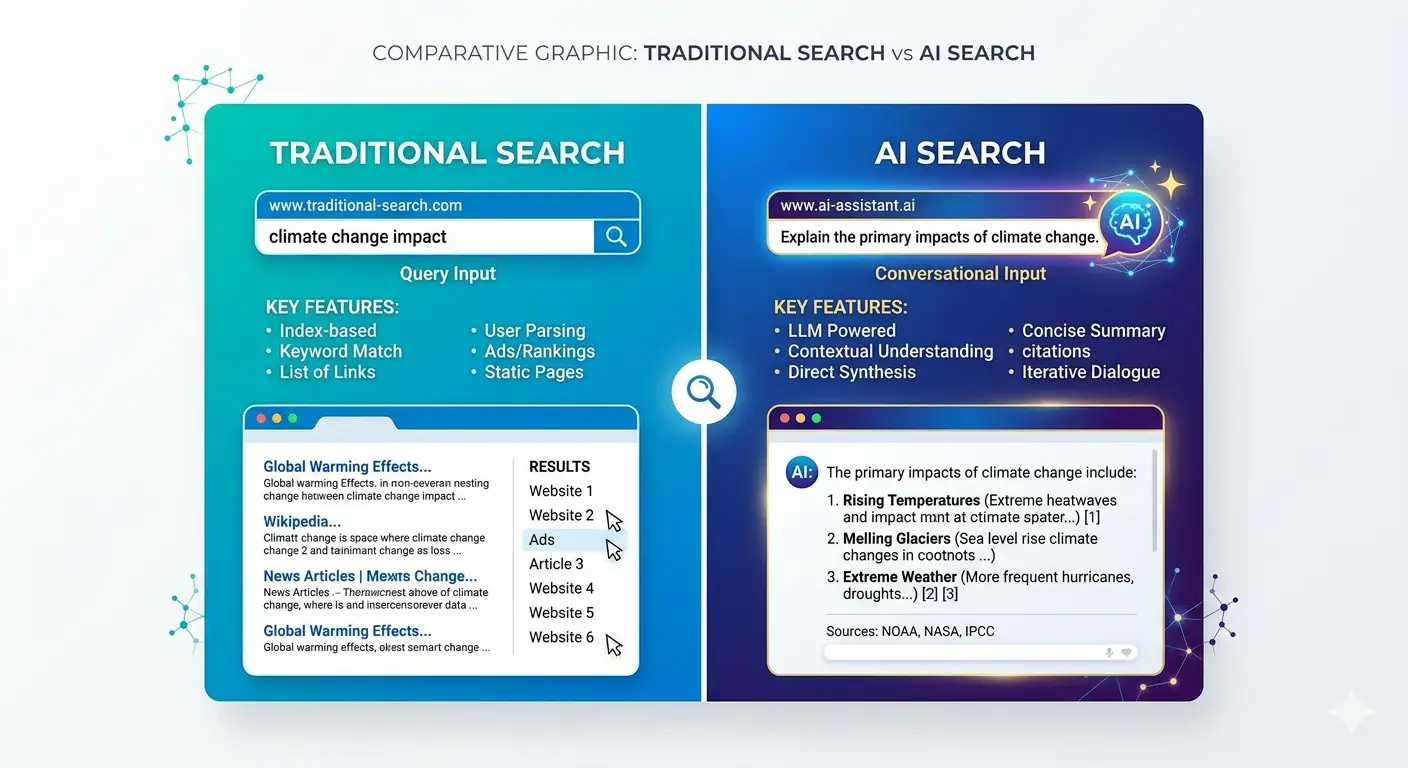
Both appear on the same Google search results page. They reach the same people. The fundamental difference is in how you pay for the visibility, how quickly it arrives, and how durable it is.
The Core Differences
| Google Ads | SEO | |
|---|---|---|
| Speed to results | Days to weeks | 3–12 months |
| Cost model | Pay per click | Time and resource investment |
| Durability | Stops when you stop paying | Compounds over time |
| Targeting | Precise — keyword, location, device, time | Broad — whoever searches the term |
| Scalability | Instantly scalable with budget | Slow to scale, hard to accelerate |
| Trust signals | Lower — users know it’s an ad | Higher — organic results feel earned |
| Data | Rich and immediate | Slower to accumulate |
| Competition | Auction-based — costs rise with competition | Long-term effort — less susceptible to sudden changes |
Neither column is universally better. The right choice depends on which characteristics matter most for your business right now.
When Google Ads Makes More Sense
You need results now. If you’ve just launched, if you’ve had a quiet quarter, if you’ve taken on a new member of staff and need to fill your pipeline — Google Ads generates enquiries immediately. SEO cannot do this. No amount of excellent content will get you to page one within four weeks.
You’re testing a new offer or market. Google Ads gives you data fast. You can run ads to a new service page, see whether people click and enquire, and use that evidence to decide whether to invest more broadly. SEO doesn’t give you that feedback loop at speed.
Your average client value is high enough to justify the cost. If winning one new client is worth £5,000 to your business, spending £200 in ad spend to acquire them is an excellent return. If winning one new client is worth £150, the maths is much harder.
You’re in a market with clear, specific search intent. “Solicitor for employment dispute Coventry” — someone searching that has a specific, immediate need and high intent to act. Google Ads for high-intent specific searches tends to convert well precisely because the searcher is ready.
You have a website that converts. This is critical and often overlooked. Google Ads amplifies your existing conversion rate. If 1 in 50 of your organic visitors enquires, paid traffic will convert at roughly the same rate or slightly lower. Ads without a converting website is expensive evidence of a website problem.
When SEO Makes More Sense
You’re playing a long game. If you’re building a business with a five-year horizon, organic search is one of the most durable and cost-effective channels available. A website that ranks for ten high-value keywords and generates 200 visits per month costs the same to run whether that traffic produces 2 enquiries or 20.
Your target keywords are prohibitively expensive in Ads. Some industries — legal, financial, insurance, property — have Google Ads costs per click of £10–£50 or more. For a small business, running meaningful campaigns in these sectors is often economically impossible. SEO is the more viable path to visibility.
You want to build authority and trust over time. Organic search results carry more inherent trust than ads — users know the ads are paid for. A business that ranks organically on page one for competitive keywords is perceived as more established and credible than one that only appears in the paid section.
Your content can genuinely answer questions people are asking. If your service or industry generates questions — which most do — a content strategy built around answering those questions is an SEO and AEO asset that compounds indefinitely. Every blog post that ranks is working for you 24 hours a day without ongoing cost.
You have time but limited budget. SEO requires time and consistent effort, but the media spend is zero. For businesses with tight cash flow but genuine capacity to produce content and build their online presence, SEO provides long-term return that Ads cannot match for the same investment level.
The Case for Both — and the Sequence That Works
The question “which should I invest in first?” implies a binary choice. For most businesses, the most effective answer is a sequence rather than a selection.
Phase 1 — Immediate visibility while building foundations (months 1–6): Run Google Ads for your highest-value services to generate enquiries now. Simultaneously, begin the foundational SEO work — technical optimisation, keyword strategy, on-page optimisation, Google Business Profile — that takes time to build momentum. The ads fund the business while the SEO is being built.
Phase 2 — SEO gaining traction (months 6–12): As your organic rankings improve and content begins to generate traffic, you’ll start to see enquiries coming through without ad spend. Your cost per acquisition begins to fall. You can reduce Ads spend on the keywords you’re now ranking for organically and redirect budget to keywords where you still need paid visibility.
Phase 3 — Compound growth (month 12+): Strong organic rankings mean you can choose where to deploy paid spend strategically — new services, new geographic markets, seasonal peaks — rather than using it as a crutch for basic visibility. Your overall cost of client acquisition falls significantly compared to businesses still entirely dependent on paid ads.
This sequence takes patience in the early months. But businesses that follow it consistently are in a dramatically stronger position at the two-year mark than those that chose one channel and ignored the other.
The Decisions That Actually Determine the Right Answer for You
Rather than prescribing a universal answer, here are the questions that determine what makes sense for your specific business:
How urgently do you need enquiries? If the pipeline is empty and the business needs revenue in the next 30 days, SEO cannot help. Start with Ads.
What is one new client worth to your business over their lifetime? This determines your maximum viable cost per acquisition — and therefore whether Ads economics work in your sector.
How competitive are your target keywords in paid search? Research the average CPC for your core keywords in Google Keyword Planner before committing to an Ads budget. Some markets are economically accessible; others are not.
Do you have a website that converts? If not, fix that first. Both channels require a converting website to be worthwhile.
Do you have the content and patience for SEO? SEO requires consistent effort over an extended period. A business that publishes one blog post and waits three months for results has not done SEO. If you’re not prepared to invest consistently for 6–12 months, the return will be disappointing.
What does your competition look like? Check whether your main competitors are appearing in the paid results and/or the organic results for your target keywords. This tells you where the existing demand is being captured and what you’re competing against.
The Most Common Mistakes
Stopping Google Ads too early. Campaigns need 60–90 days of data to optimise properly. Businesses that run ads for three weeks, see no instant profit, and stop have paid for data they then don’t use.
Expecting SEO results in 60 days. SEO is not slow because it’s broken — it’s slow because building trust and authority with Google takes time. Expectations need to be calibrated accordingly.
Pouring ad budget into a website that doesn’t convert. The number one cause of disappointing Google Ads performance is not the ads — it’s the landing page. Fix the conversion rate before increasing spend.
Treating Ads and SEO as separate strategies run by separate people. The best results come when both work together — Ads data informing keyword strategy for SEO, SEO content reducing the cost of Ads campaigns, both feeding into a coherent view of what’s working and why.
Choosing based on who’s pitching you. An SEO agency will almost always recommend SEO. A PPC agency will almost always recommend Ads. Neither is a neutral adviser. The question to ask is not “which channel?” but “what does my business need, and what’s the evidence for that?”
Frequently Asked Questions
Is Google Ads or SEO better for small businesses? Neither is universally better — the right choice depends on your timeline, budget, business stage, and sector. Google Ads delivers immediate results but requires ongoing spend. SEO builds durable visibility over time but takes 6–12 months to gain meaningful traction. Most businesses benefit from a phased approach: using Google Ads to generate enquiries in the short term while building SEO in parallel.
How much does Google Ads cost for a small business in the UK? Costs vary by industry and keyword competitiveness. For local service businesses in the UK, meaningful search campaigns typically require £500–£2,000 per month in ad spend. Highly competitive sectors such as legal or financial services can require significantly more. Below approximately £500/month, most campaigns do not generate enough data to optimise effectively.
How long does SEO take to show results? Meaningful organic traffic growth typically begins within 3–6 months of consistent SEO work, including technical optimisation, content publication, and link building. Competitive keywords can take 6–18 months. The timeline depends on domain authority, the competitiveness of your target keywords, and the consistency of your effort. Early-stage websites in low-competition local markets often see faster movement.
Can I run Google Ads and SEO at the same time? Yes — and for most businesses this is the recommended approach. Google Ads data (which keywords convert, which audiences respond, which messages work) directly informs SEO strategy, and improving organic rankings over time reduces dependence on paid spend. Running both simultaneously, with coordinated strategy, produces better results than either channel alone.
What is the difference between Google Ads and organic Google rankings? Google Ads are paid placements that appear at the top and bottom of search results pages, labelled as “Sponsored.” Organic rankings are unpaid positions determined by Google’s algorithm — they appear below the ads and are based on relevance, authority, and content quality. Organic results receive more clicks overall but require significant time to build. Paid results are immediate but cost money per click.
Should I hire an SEO agency or run Google Ads myself? Google Ads can be run by non-specialists using Google’s interface, but without experience it is easy to spend budget inefficiently. Most businesses see better returns working with a specialist, at least initially. SEO can be partially managed in-house — particularly content creation — with specialist support for technical and strategic elements. The right structure depends on your team’s capacity and expertise.
Final Thought
The businesses that win in search over the long term are not the ones that chose the right channel. They’re the ones that built both — using paid search to fund their business in the short term while investing consistently in the organic authority that makes search marketing progressively cheaper and more powerful over time.
The question is not which is better. It’s which to prioritise first, given where you are right now — and how quickly you’re ready to build the other alongside it.
At HusQuay, we help businesses make this decision with clear eyes and build the right combination of paid and organic strategy for their specific situation. If you’re not sure which applies to yours, let’s talk it through.
👉 Book a free strategy call with the HusQuay team
HusQuay is a digital growth agency helping small businesses across the UK, USA, Australia, and Canada build websites, brands, and digital systems that create measurable results. Based in Wolverhampton, UK.